Around the Table: Contribute Your Recipe Cards and Zines
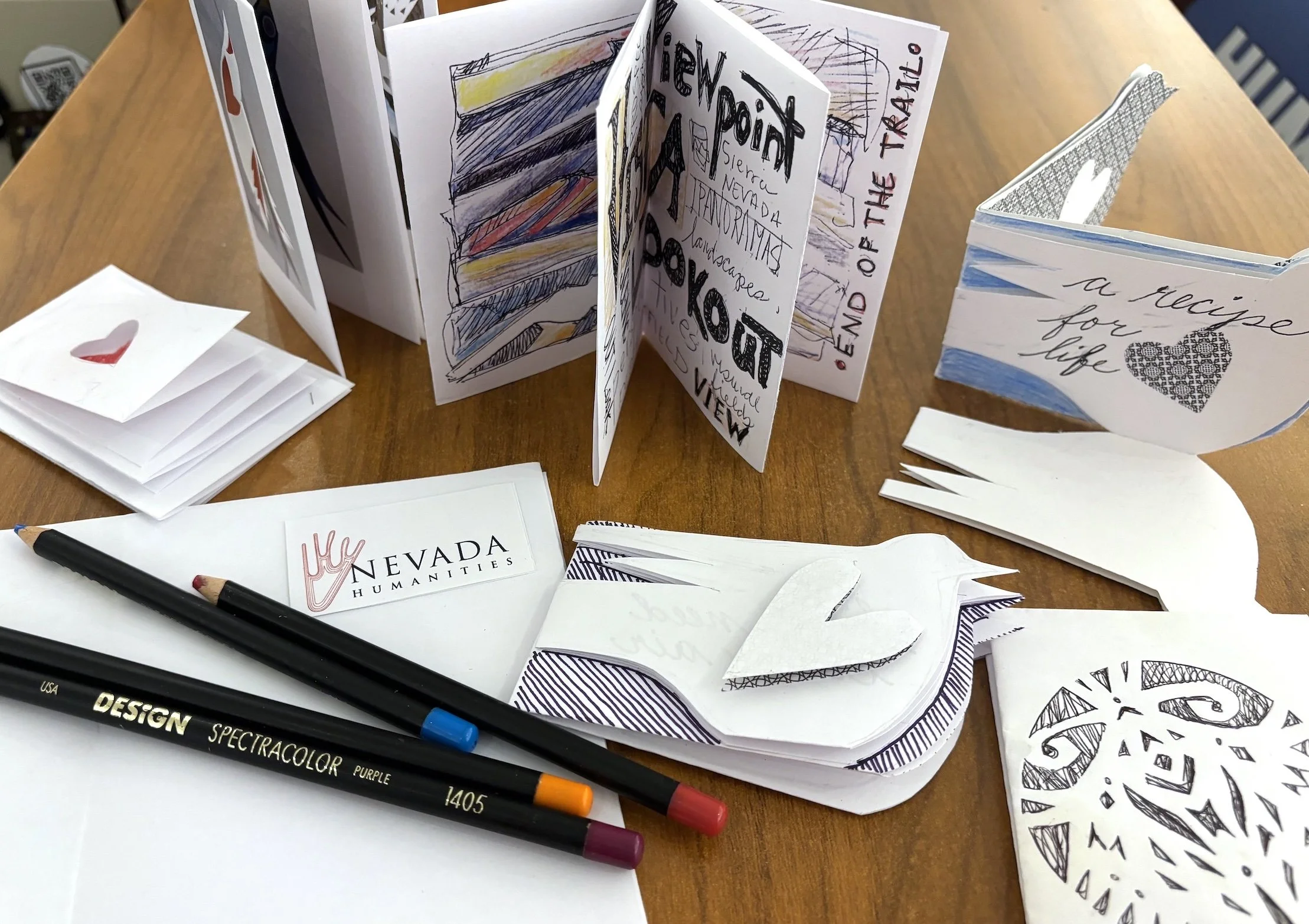
Credit: Nevada Humanities/Bobbie Ann Howell.
Around the Table is an initiative of free, public humanities-based programming in commemoration of the 250th anniversary of the signing of the Declaration of Independence. Throughout 2026, Nevada Humanities invites Nevadans to share and celebrate their diverse food traditions through a series of public events and creative reflections that explore Nevada foodways, food traditions, and expressive culture across the Silver State.
As part of Around the Table, Nevada Humanities invites Nevadans to contribute food stories and traditions in a new zine and recipe card collection housed in the Nevada Humanities archives.
What is a recipe card?
A recipe card can be any small, shareable document that includes ingredients and instructions to prepare a dish. Recipe cards can be as simple as a few lines of instructions or as complex as the recipe requires. Recipe cards can be illustrated and decorated as you wish.
What is a zine?
“Zine” refers to a handcrafted, self-published small magazine or small format booklet. Zines can be made in a wide range of creative book formats. One popular format is to make an eight-page zine by folding a single piece of paper—either letter-sized (8.5” × 11”) or tabloid-sized (11” × 17”) copy paper. This is just a suggestion; let your creativity be your guide. To help get you started, we have created a free how-to guide here for your Around the Table zines.
What do I write about?
Your zine or recipe card can be descriptive, illustrative, or both. It may contain any form of a recipe, poem, story, or memory paired with text that expresses why it is important to you.
Some questions to consider:
What is the story that you would like to tell? What would you like your recipe card or zine to say about you, your family, community, culture, or where you are from?
Are there specific dishes or food traditions that are important to you and your family?
Do you have special foods and traditions for celebrations, life events, and meaningful moments? Happy moments? Sad moments?
Do you have special memories oriented around food traditions?
Does food play a special role in your family or help define your sense of identity and heritage?
How did you learn to cook? Who taught you? What did they teach you? Who do you teach?
What kind of tools, ingredients, or spices are in your kitchen? What do they mean to you? What do they smell and taste like?
How would you describe the flavors that are most important to you?
How do you present your dishes or meals? Do you have special ways of sharing food with others?
Who joins you around your table?
Whom would you invite to a special meal?
Submit your recipe cards and zines
You may submit recipe cards and zines in digital or paper formats. Please include your name and email address. If you have a website or a social media platform where you share your work, please include this information as part of your submission. Submit your recipe cards and zines to Nevada Humanities anytime, but we would like to receive them by December 31, 2026.
There are two ways to submit:
Mail Submissions: Send your recipe cards or zines by mail to Nevada Humanities, 1017 S. First St. #190, Las Vegas, NV 89101.
Digital Submissions: Send a digital copy of your recipe cards or zines (e.g., digital photographs, digital image files) via this online form. (Please note that a Google account is required for digital submissions via the online form. Alternatively, you may also email your files to bahowell@nevadahumanities.org.
You may also drop off your submissions at the Nevada Humanities Program Gallery (1017 S. First St. #190, Las Vegas) during open hours.
Zine-Making Resources
There are endless creative options for zines. To find resources and how-to guides for making your own zines, visit your local library or art center, search for resources on the internet, or consult with an art, writing, or poetry community. You will find a few online resources below to get you started.
Library of Congress/National Book Festival: Zine-Making Activity
LCC Printmaking, Book Arts and Letterpress: Easy Single Sheet Zine Making at Home
Whitworth University: Whitworth Library's Zine Collection: Making Zines
Camila Garcia Art (YouTube): 5 Zine Folding Techniques You Can Try Today (Beginner Friendly)
Greg Kietsel (YouTube): Let’s Talk about Zines and Why You Should Make One
BBC Maestro (YouTube): Why Marco Pierre White Gave Up on Michelin (This video is example of a food journey story.)
Please note: all links provided above are for informational purposes only. Any views or opinions represented do not represent those of Nevada Humanities, its staff, or any donor, partner, or affiliated organization, unless explicitly stated.
Around the Table programming is produced by Nevada Humanities as part of the national initiative By the People: Conversations Beyond 250, which is a series of community-driven programs created by humanities councils in collaboration with local partners, and was developed by the Federation of State Humanities Councils and the Smithsonian Center for Folklife and Cultural Heritage.